From component to computational model
CAD geometry, the fluid domain and operating data are converted into a numerical model. Small design details are retained where they affect flow, pressure loss or heat transfer.
The model may be steady or transient and can include turbulence, buoyancy, multiphase flow, rotation, compressibility or heat transfer as required.
Typical questions
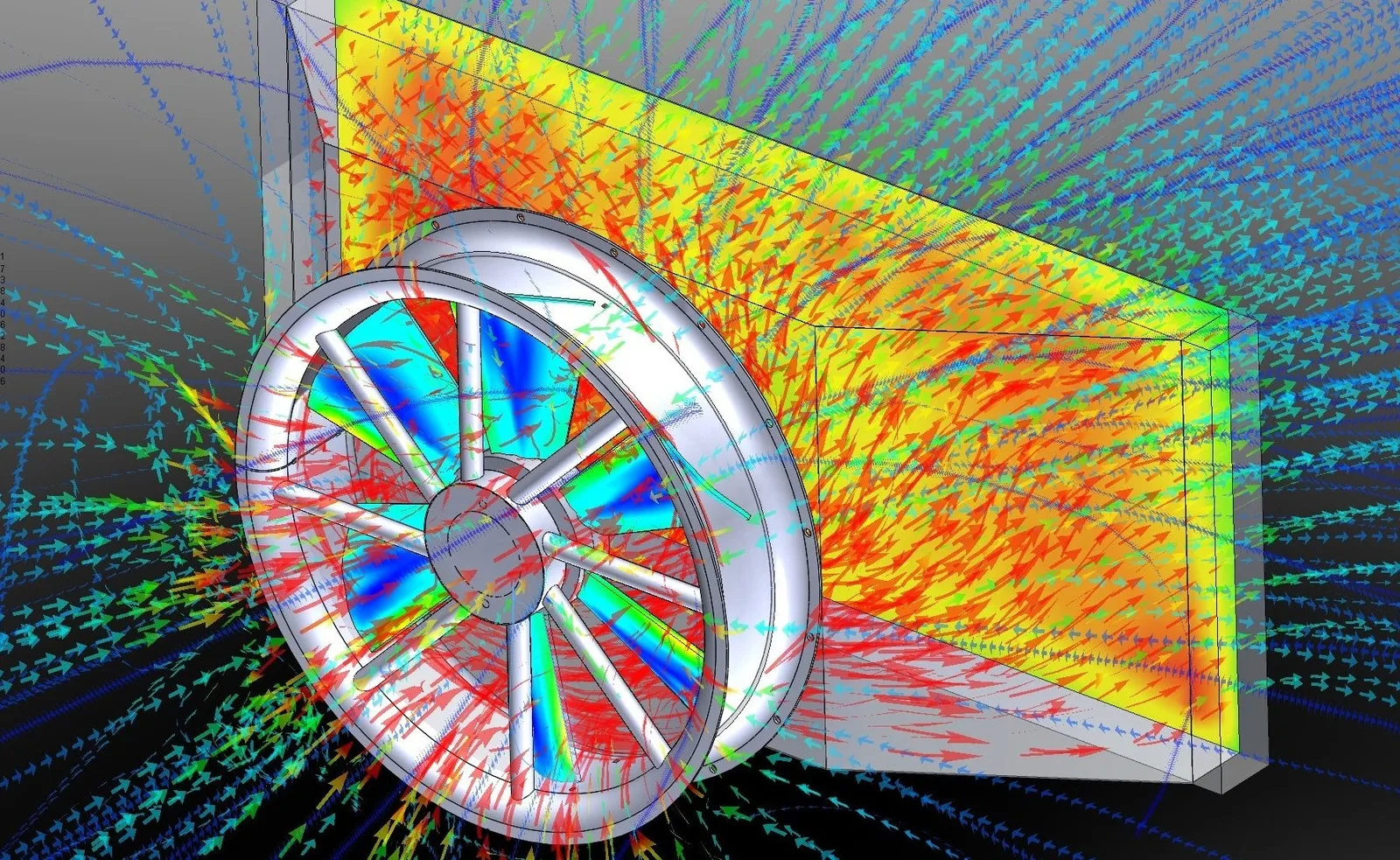
CFD supports assessment of air and liquid flows in components and complete systems.
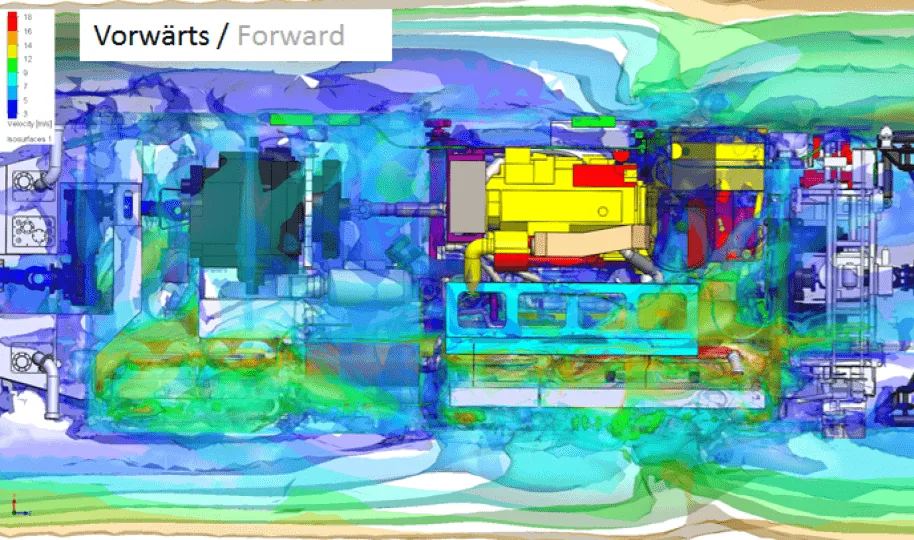
- Air distribution, cooling and hot-air recirculation
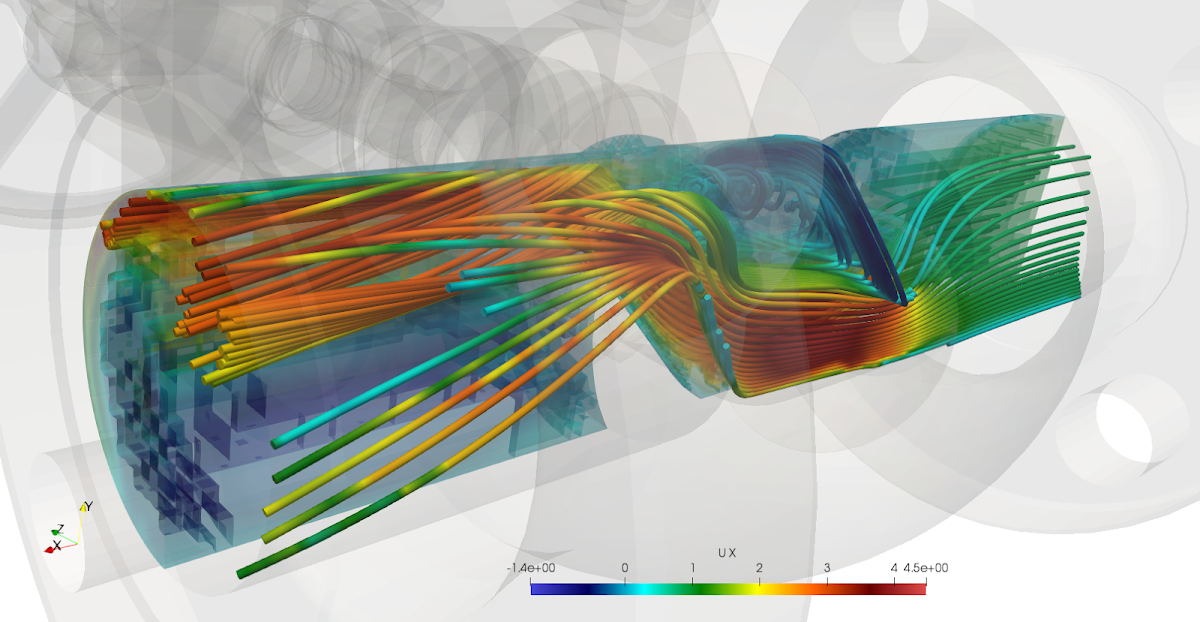
- Pressure loss, flow rate and system curves
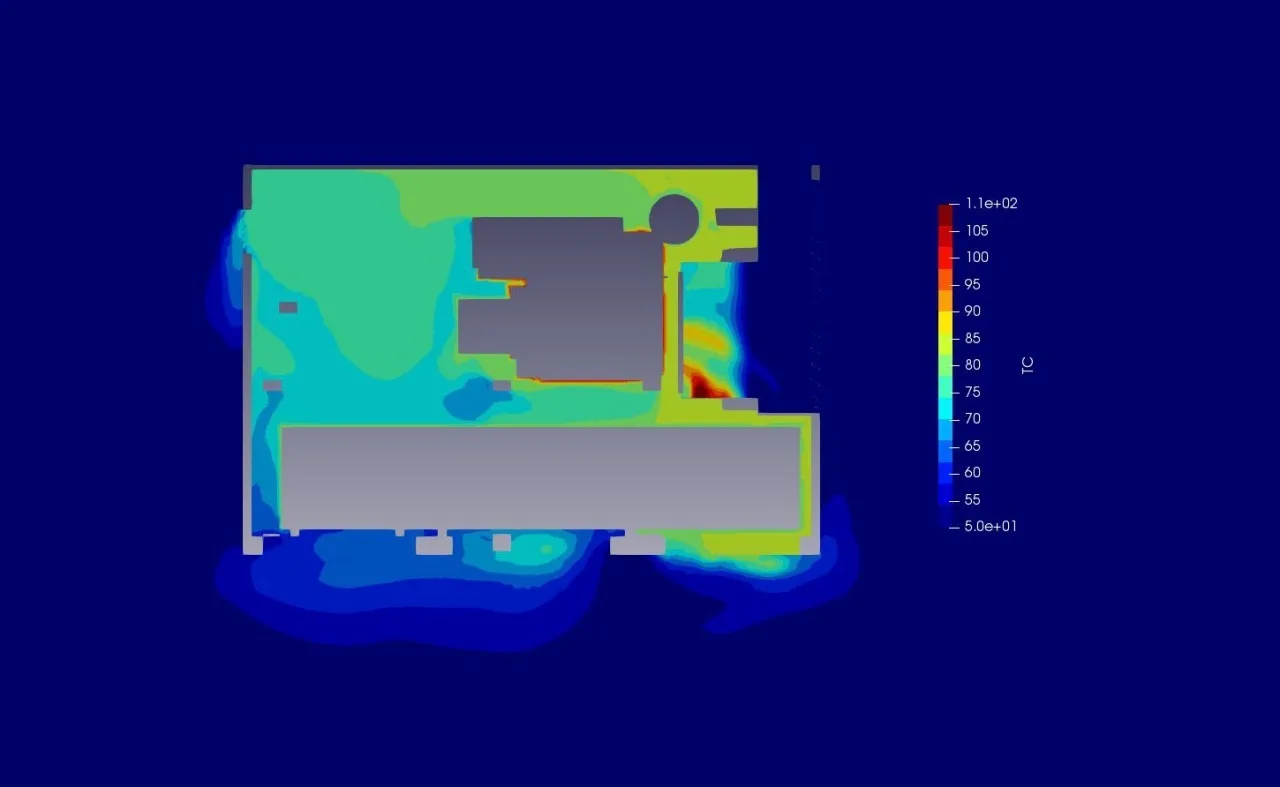
- Heat transfer and temperature distribution
- Aerodynamic forces, moments and wakes
- Mixing, species transport, smoke and gas dispersion
Output and limits
A simulation provides fields, balance quantities and variant comparisons. Its scope depends on geometry, boundary conditions, property data, mesh and physical models.
Comparison with measurements evaluates predictive accuracy for the configuration studied.