
Typical decisions
Service / Thermal
Thermal analysis: assess heat sources and heat paths together.
Make local temperatures, cooling concepts and thermally loaded interfaces useful to design decisions.
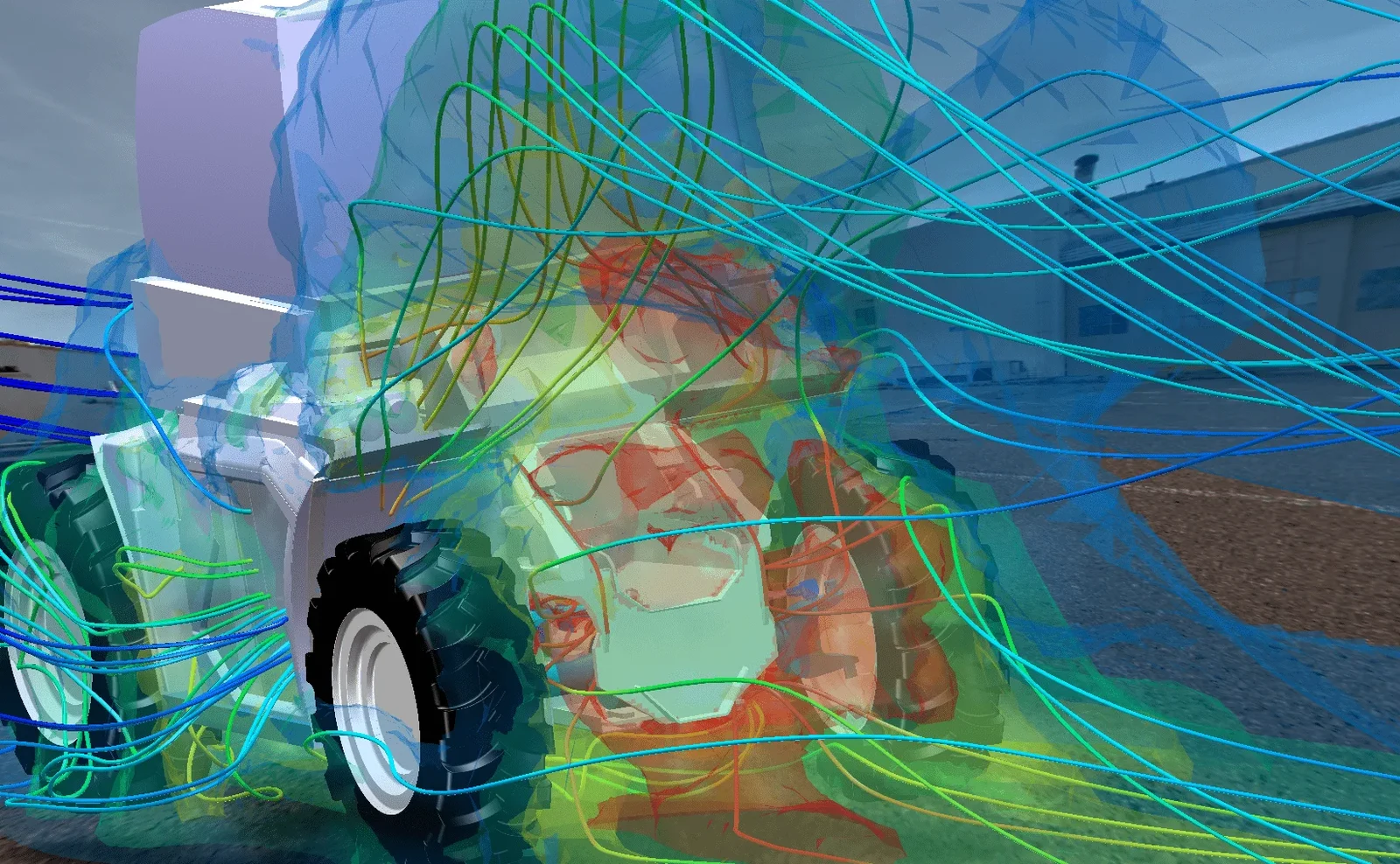
We connect heat balances with spatial investigation of fluids and solids. The key questions are where heat arises, which path it follows and how operating and environmental conditions affect its removal. This connects cooling, warm-up behaviour and the effects of design changes in one assessment.
- Is cooling limited by heat rejection or airflow distribution?
- How does heat reach a bearing?
- Which operating and environmental conditions govern?
- Which measurements are needed for comparison?
Analysis scope
Heat sources and load balance
- Reconcile losses and operating cases
- Steady and transient heat transfer
- Conduction, convection and radiation
- Account for ambient conditions, solar loading and installation
Cooling within the system
- Connect module and container models
- Bypass flow, cooler distribution and pressure margin
- Coordinate fan, cooler and installation space
- Batteries, generator containers and underhood cooling
Thermal interfaces
- Trace heat paths to temperature-sensitive bearings
- Compare section, length and contact
- Cabin climate, heated surfaces and air supply
- Plan measurements and suitable comparison conditions
Typical outputs
Findings that clarify the next design step.
- Temperature and heat-flow fields for the operating case
- Assessment of limiting thermal and flow paths
- Comparison of cooling concepts and component arrangements
- Guidance for design changes and measurement planning
Related project studies
 Off-highway
CFD simulation
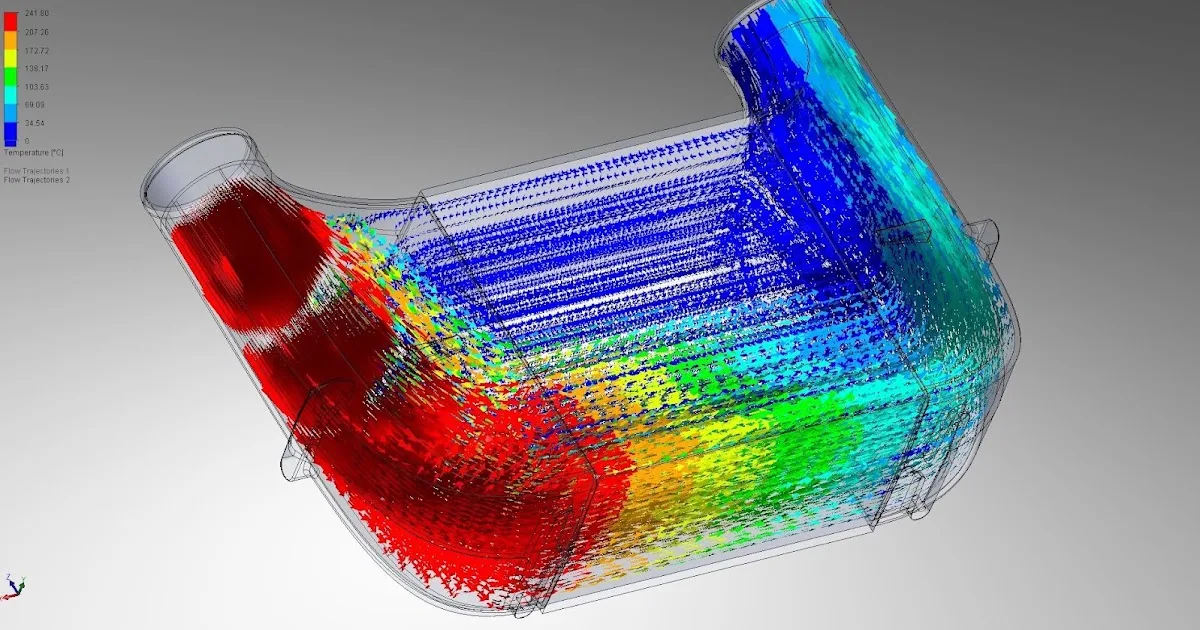
Heat-exchanger flow distribution
An unfavorable inlet geometry left large parts of the cooler matrix under-supplied. CFD exposed the recirculation and guided the geometry iterations.
View project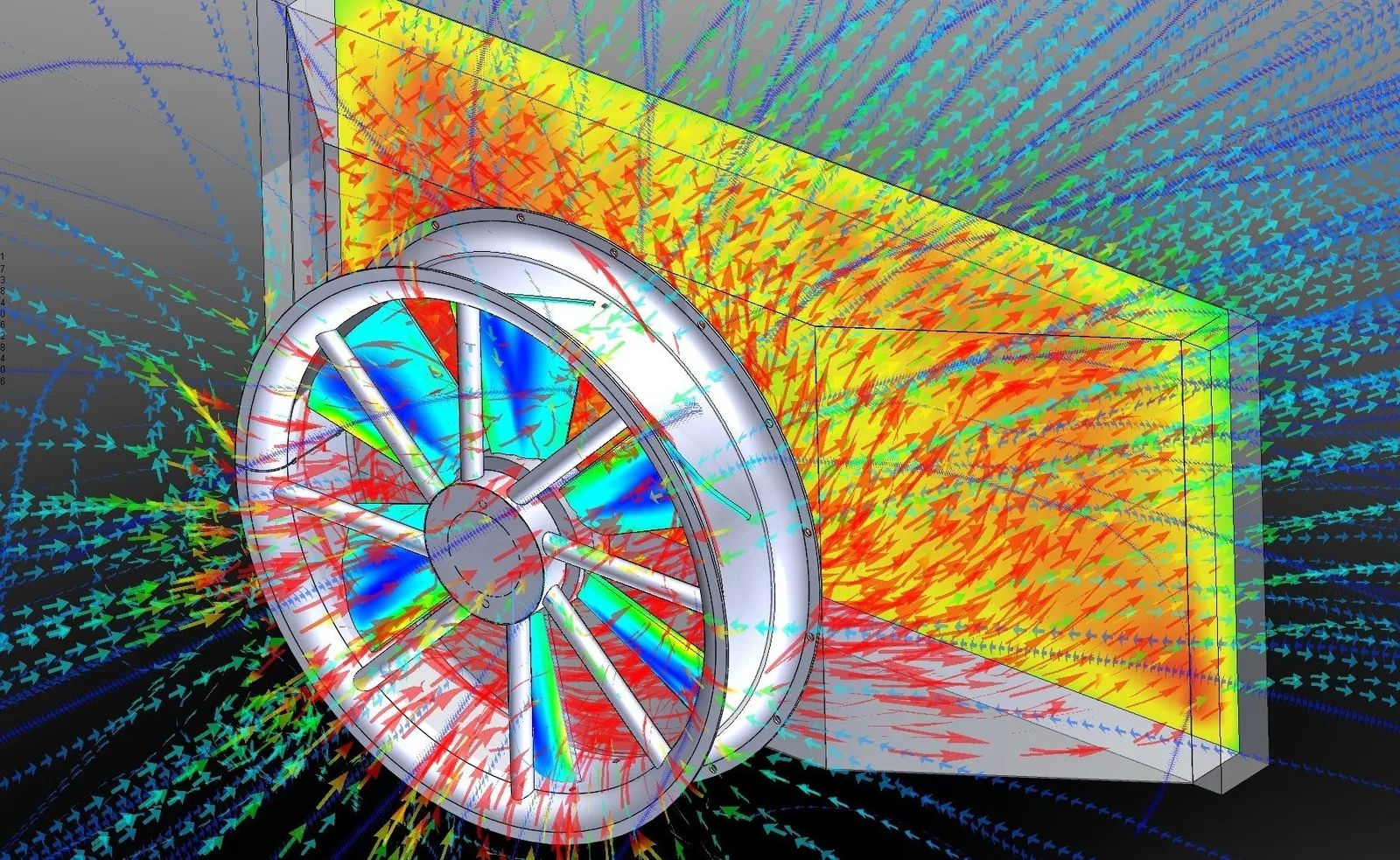 Off-highway
CFD simulation
Oil cooler and shroud
Two design variants were compared in terms of airflow, pressure loss and transferable cooling duty.
View project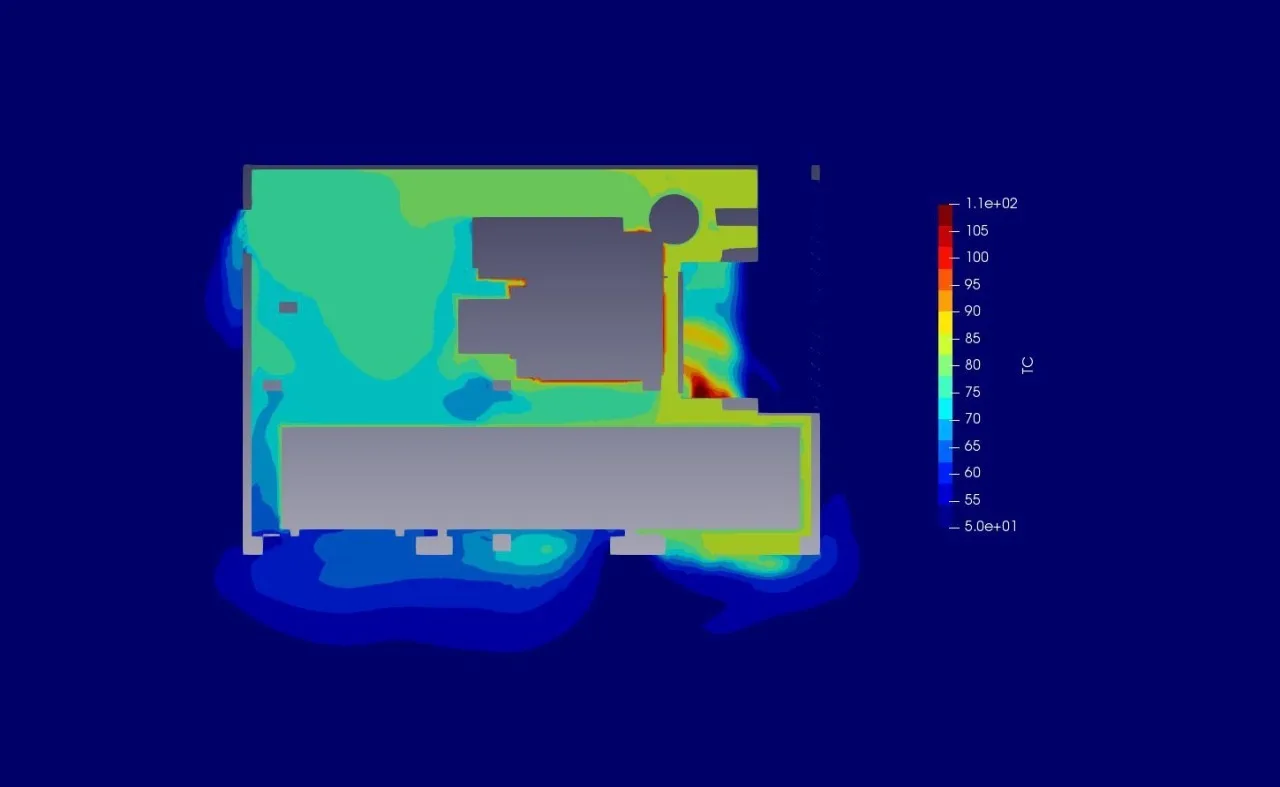 Off-highway
CFD simulation
Early cooling-concept assessment
Airflow, pressure loss and hot-air recirculation were assessed before a prototype of the enclosed machine was built.
View projectYour next engineering question