
Typical decisions
Service / Multiphysics
Coupled analysis: understand interactions within the system.
Investigate heat, flow and structures together when the design decision lies at their interfaces.
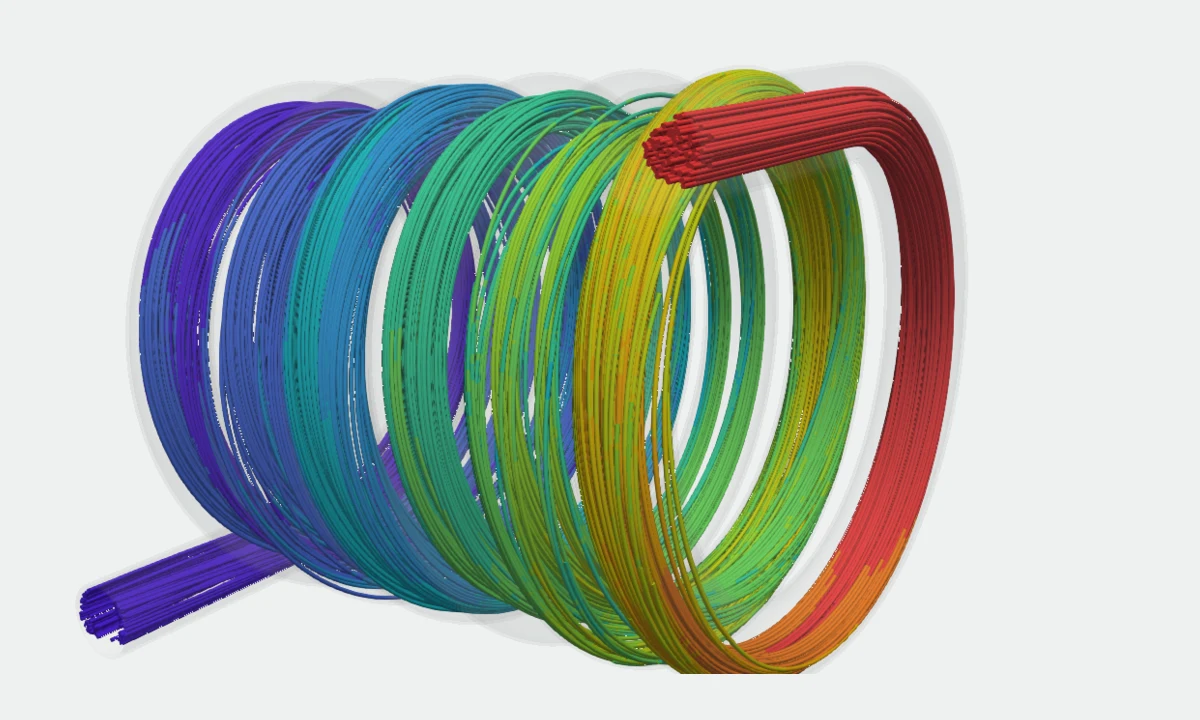
A flow model may provide heat transfer to a component, while a detailed heat-exchanger model supplies resistance data for a complete plant. We align the transfer of quantities, model boundaries and operating cases. Analytical sizing, simulation and comparison of alternatives form a connected investigation.
- Which details must be retained in the system model?
- Which quantities pass between the models?
- Which change affects several requirements together?
- What model scope suits the decision ahead?
Analysis scope
From component to system
- Connect detailed and equivalent models
- Transfer resistance characteristics into the plant
- Module heat and container airflow
- Check energy and mass balances
Heat and structures
- Heat conduction through to supports
- Temperature-dependent material data
- Thermal expansion and load transfer
- Account for contact and environmental conditions
Sizing and alternatives
- Analytical estimates before detailed modelling
- Identify influential parameters
- Balance effect against design effort
- Consider manufacturing, maintenance and measurement access
Typical outputs
Findings that clarify the next design step.
- Aligned model boundaries and load transfer
- Connected assessment of relevant physical effects
- Comparison of useful engineering alternatives
- A basis for the next design decision
Related project studies
 Process & plant engineering
CFD simulation
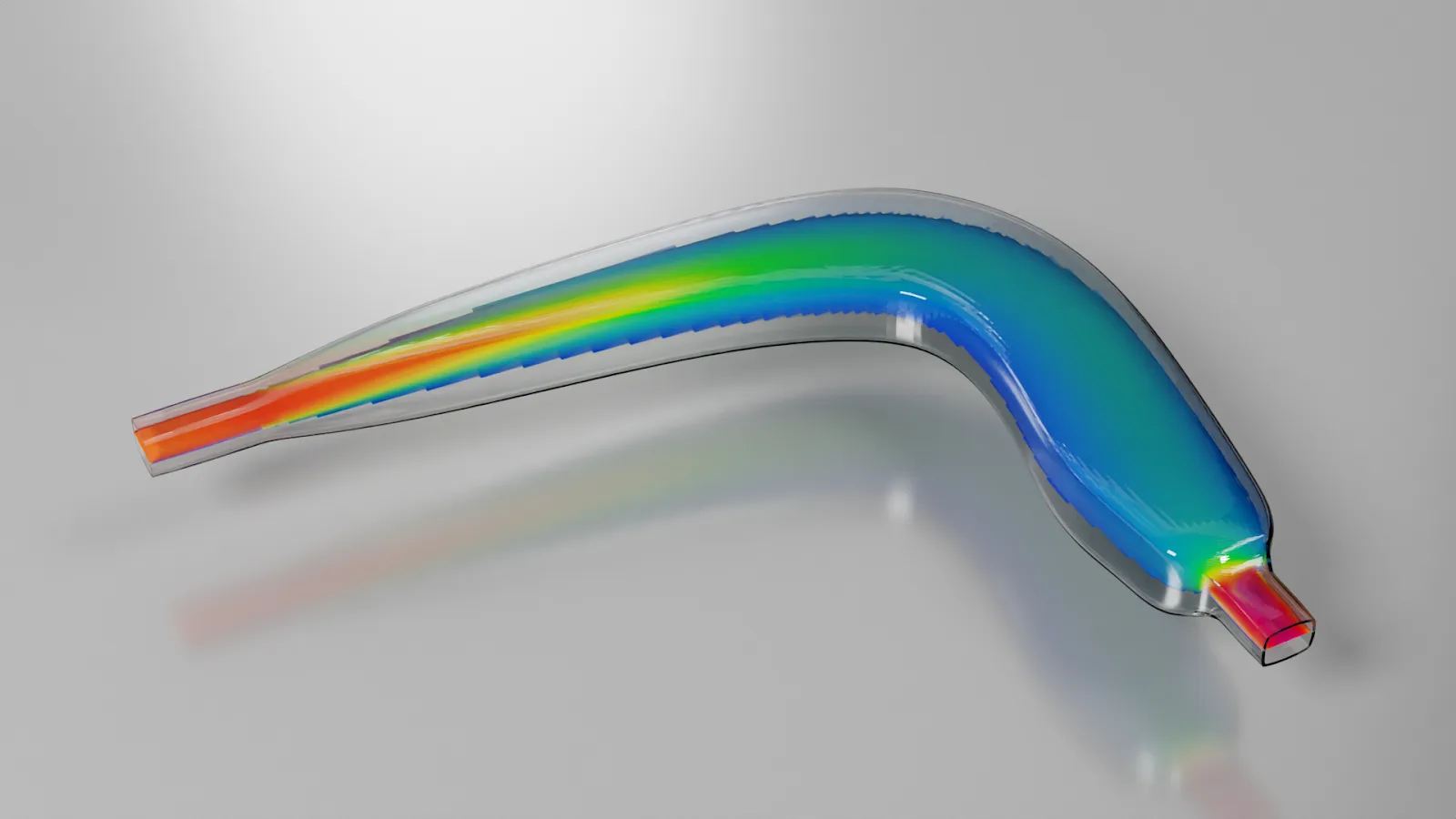
Shape optimization of a flow bend
CFD and adjoint optimization were used to develop a compact flow turn within defined packaging constraints.
View project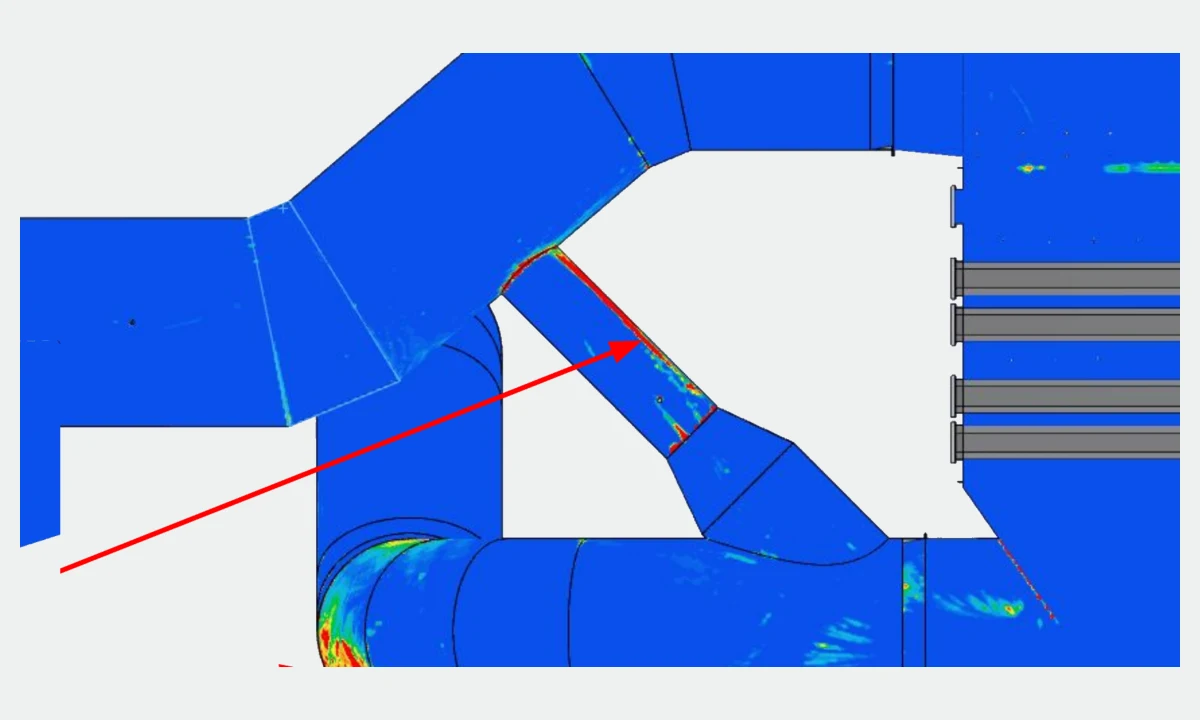 Process & plant engineering
CFD simulation
Wear mapping in a hot-gas path
A multiphase assessment connected the flow field with particle paths and impact patterns to classify potential wear concentrations in a hot process-gas route.
View project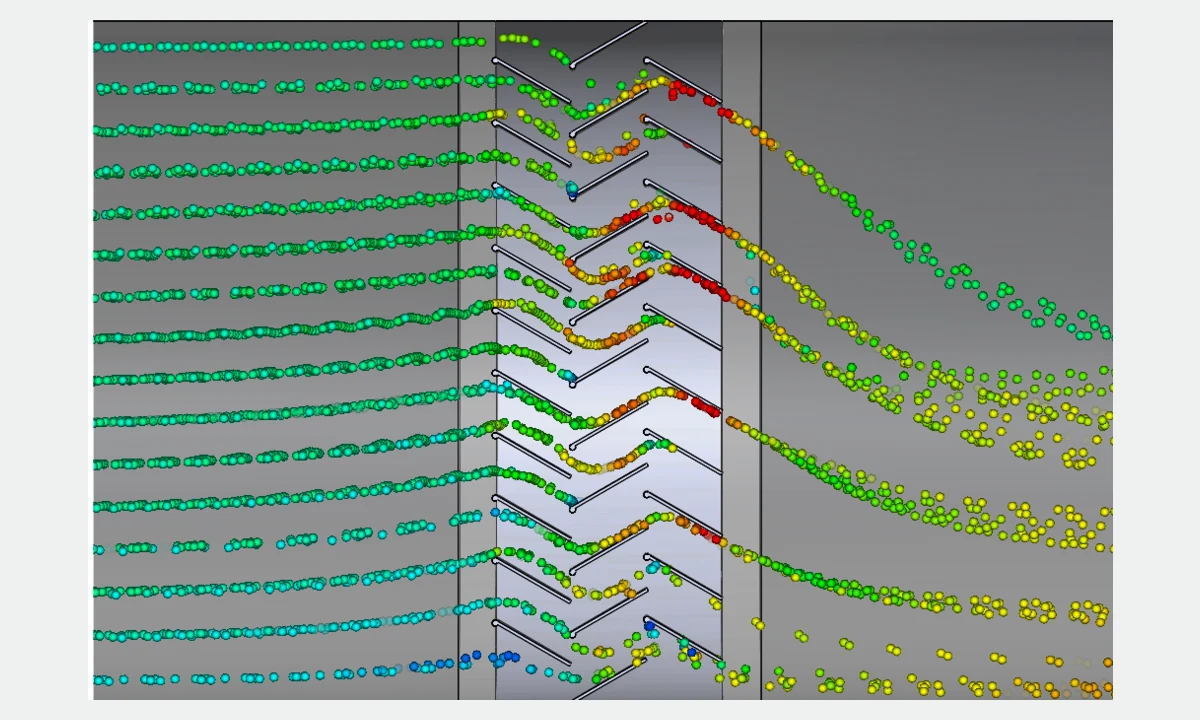 Process & plant engineering
CFD simulation
Spark pre-separator
Gas-particle CFD compared chamber and guide variants intended to divert hot or coarse particles away from the main stream before downstream equipment.
View projectYour next engineering question