Model & approach
- Calculate gas flow and representative particle classes in a coupled model
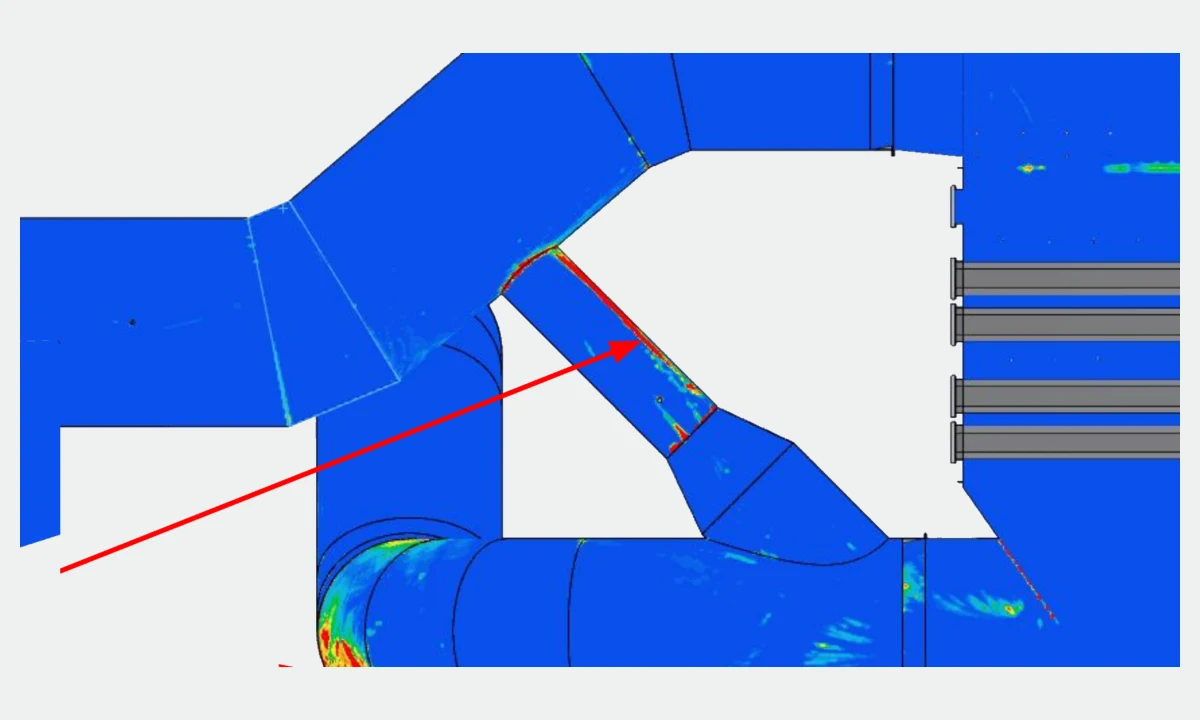
- Map impact locations, approach direction and near-wall loading indicators

Project study
A multiphase assessment connected the flow field with particle paths and impact patterns to classify potential wear concentrations in a hot process-gas route.
Engineering question
Model & approach
Boundary conditions
Results of the assessment
Engineering consequence
 Process & plant engineering
CFD simulation
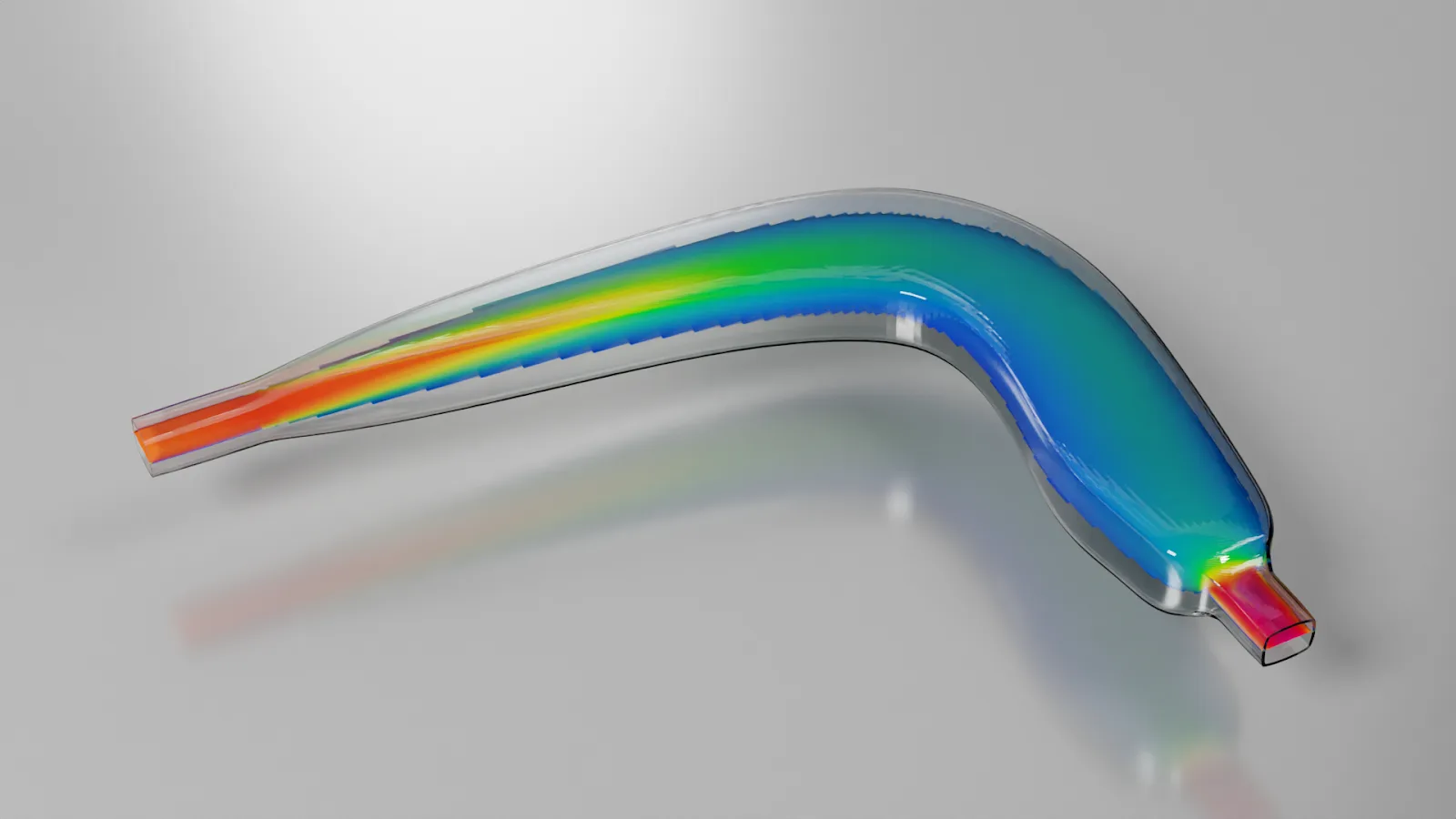
CFD and adjoint optimization were used to develop a compact flow turn within defined packaging constraints.
View project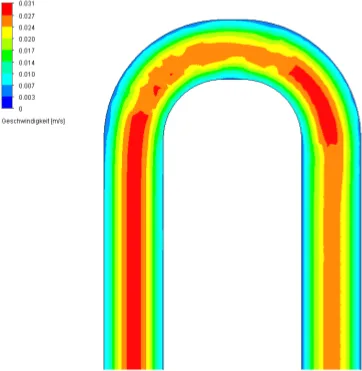 Process & plant engineering
CFD simulation
CFD assessed the form and orientation of separator baffles whose movement through pipe bends could impair stable operation.
View project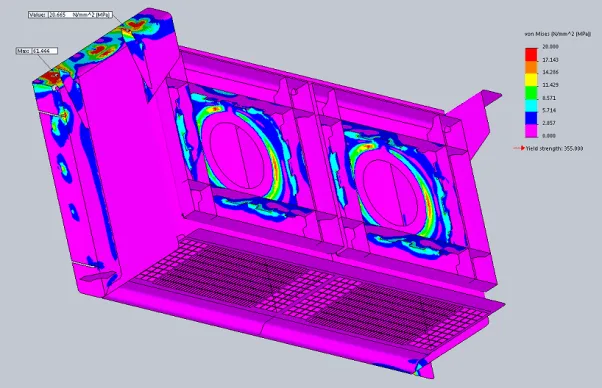 Process & plant engineering
FEA structural analysis
A finite-element model assessed the assembly, welded joints and support reactions across operating, exceptional and vibration load families.
View projectA similar question?