
Typical decisions
Service / CFD
CFD simulation: understand and improve flow paths.
Investigate flow, pressure loss and distribution to inform practical geometry and installation decisions.
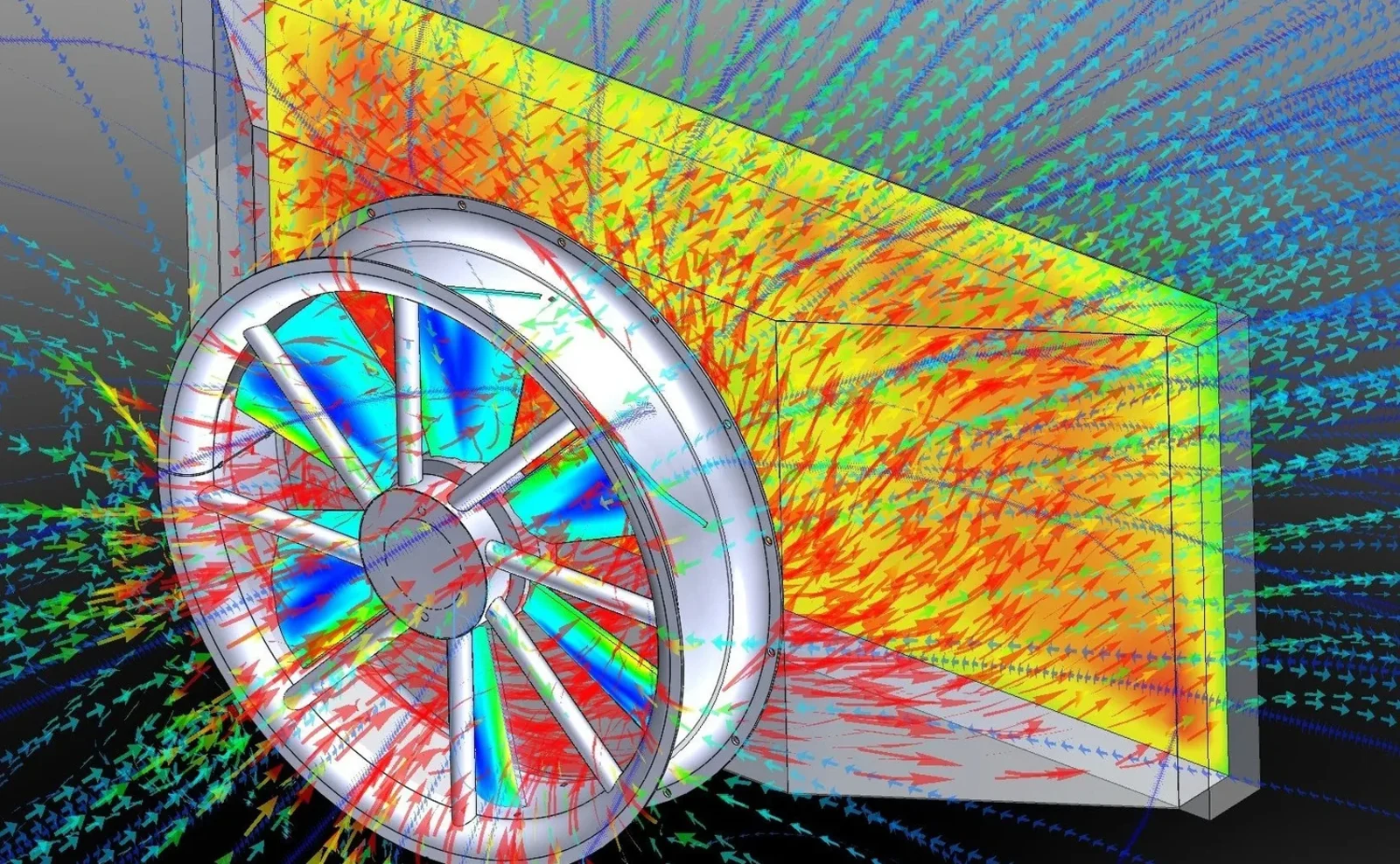
We investigate where resistance arises, which regions receive insufficient flow and how components interact. Analytical estimates and characteristic curves help establish the governing operating points. The CFD model then resolves the spatial interactions, including heat transfer, compressible flow, species transport or particles where relevant.
- Where does the governing resistance arise?
- Which regions receive insufficient flow?
- How does the installation affect the fan operating point?
- Which geometry improves distribution within the available space?
Analysis scope
Flow path and operating point
- Locate pressure loss along the system
- Assess fan and system curves together
- Identify short-circuit flow and recirculation
- Compare installation, upstream bends and connection geometry
Distribution and heat transfer
- Supply cooler faces and components more evenly
- Heat transfer between fluids and solids
- Mixing and species distribution in plants
- Assess heat exchangers, bypasses and damper positions together
Particles, gases and components
- Investigate particle trajectories and separation
- Interpret local impact patterns for wear protection
- Compare gas-dispersion and ventilation scenarios
- Assess compressible valve flow and characteristics
Typical outputs
Findings that clarify the next design step.
- Causes of pressure loss and uneven distribution
- Assessment of the installed fan operating point
- Comparison of relevant geometry alternatives
- Practical guidance for flow paths, packaging and further measurements
Related project studies
 Off-highway
CFD simulation
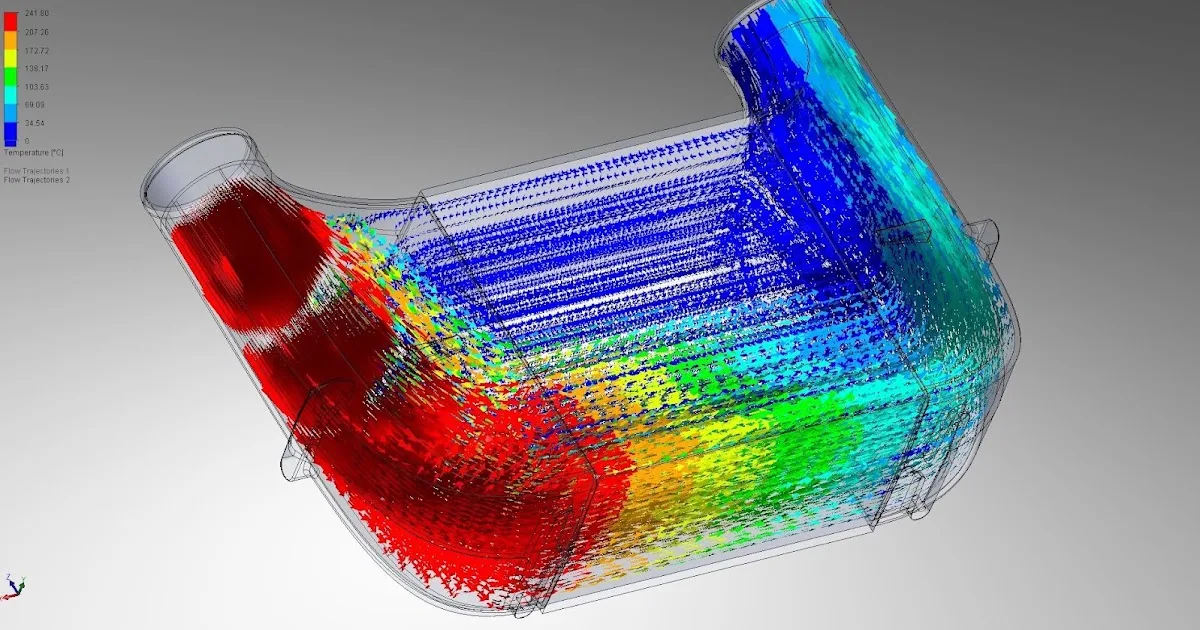
Heat-exchanger flow distribution
An unfavorable inlet geometry left large parts of the cooler matrix under-supplied. CFD exposed the recirculation and guided the geometry iterations.
View project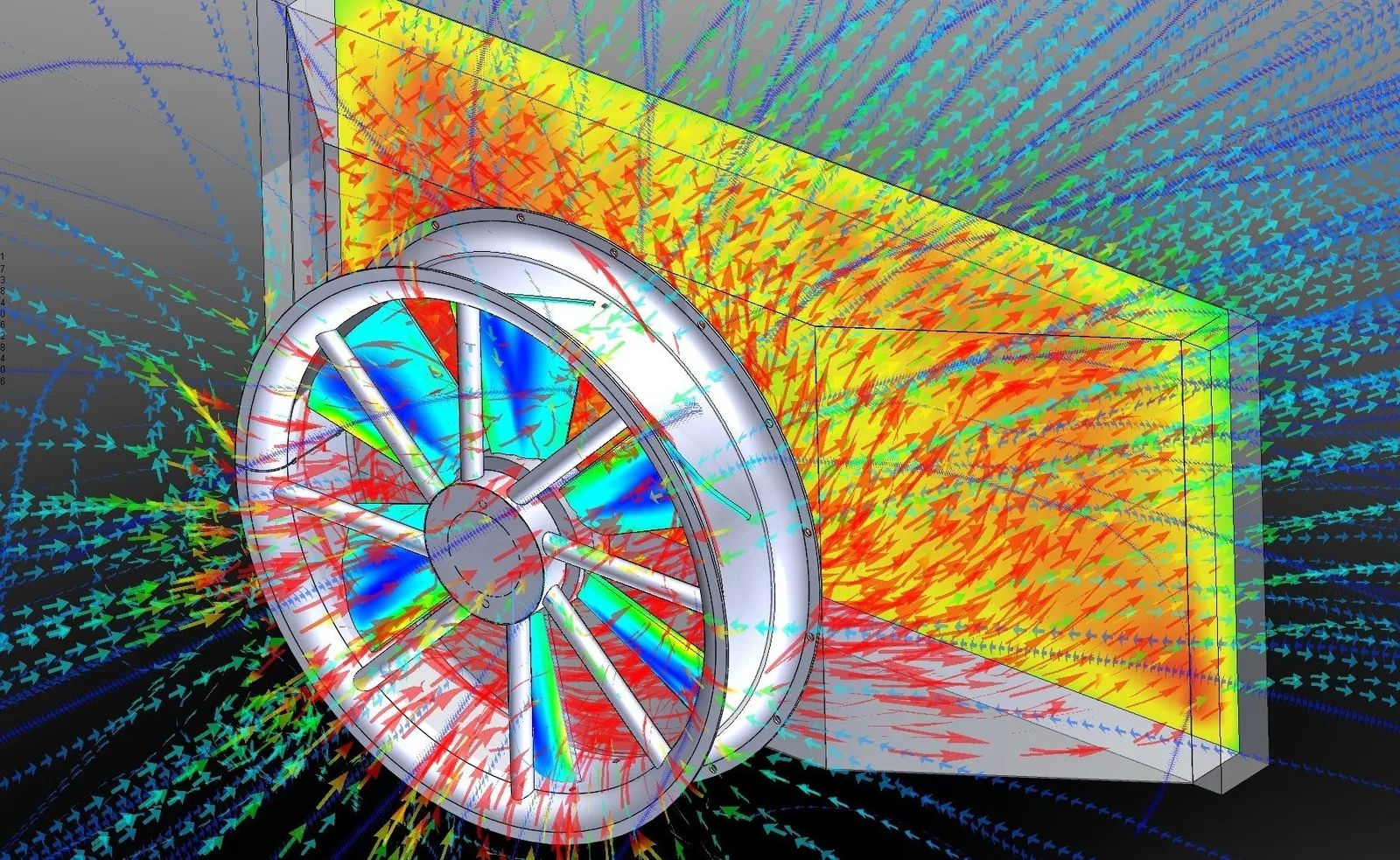 Off-highway
CFD simulation
Oil cooler and shroud
Two design variants were compared in terms of airflow, pressure loss and transferable cooling duty.
View project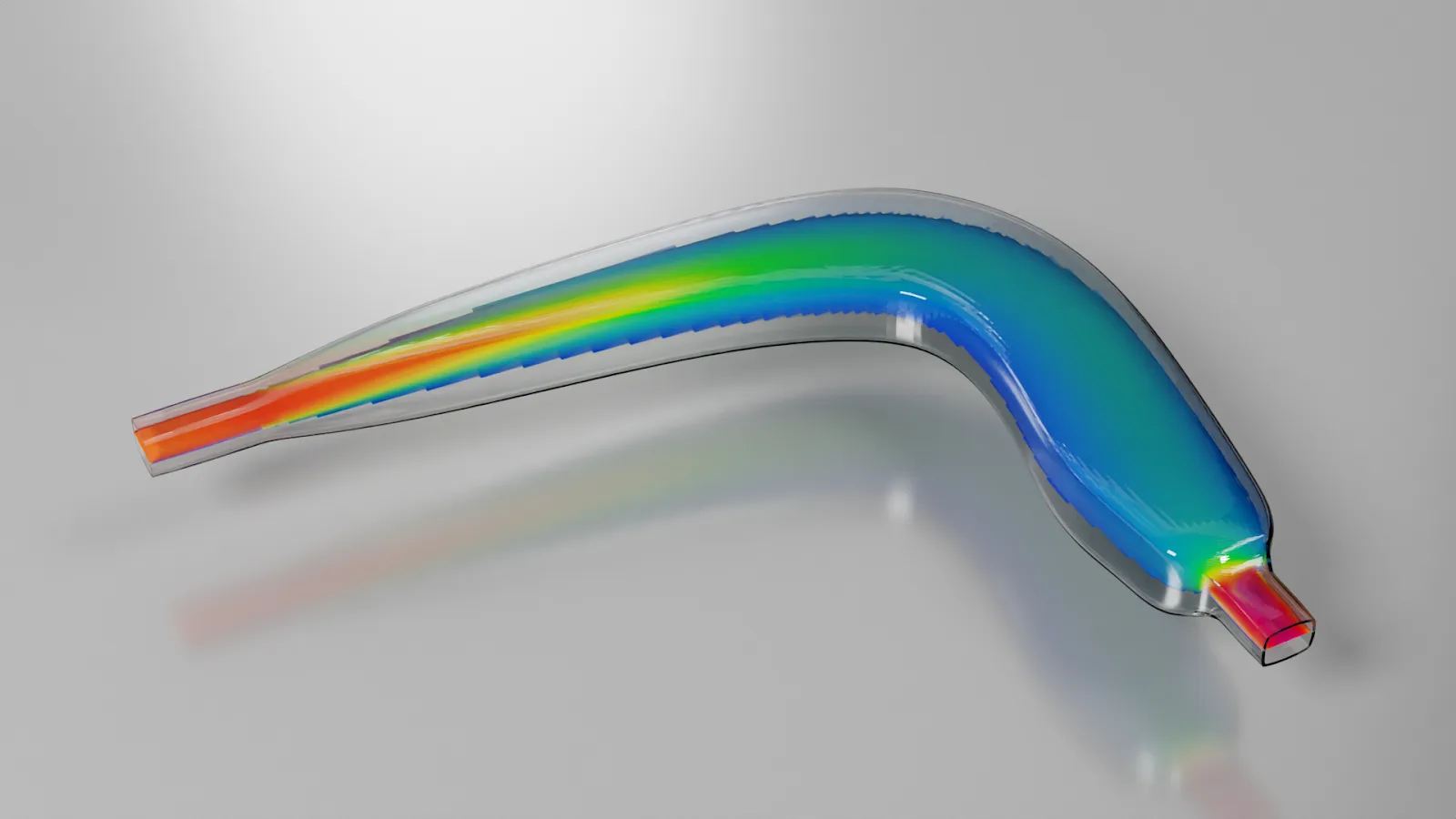 Process & plant engineering
CFD simulation
Shape optimization of a flow bend
CFD and adjoint optimization were used to develop a compact flow turn within defined packaging constraints.
View projectYour next engineering question