1. Objective and model boundary
Target quantities, variants, limits and the required decision are defined first. They determine the fluid and solid domains and the useful level of detail.
- Geometry revision and package space
- Operating conditions and load cases
- Available component curves and measurements
- Required outputs and acceptance criteria
2. Mesh, physics and boundary conditions
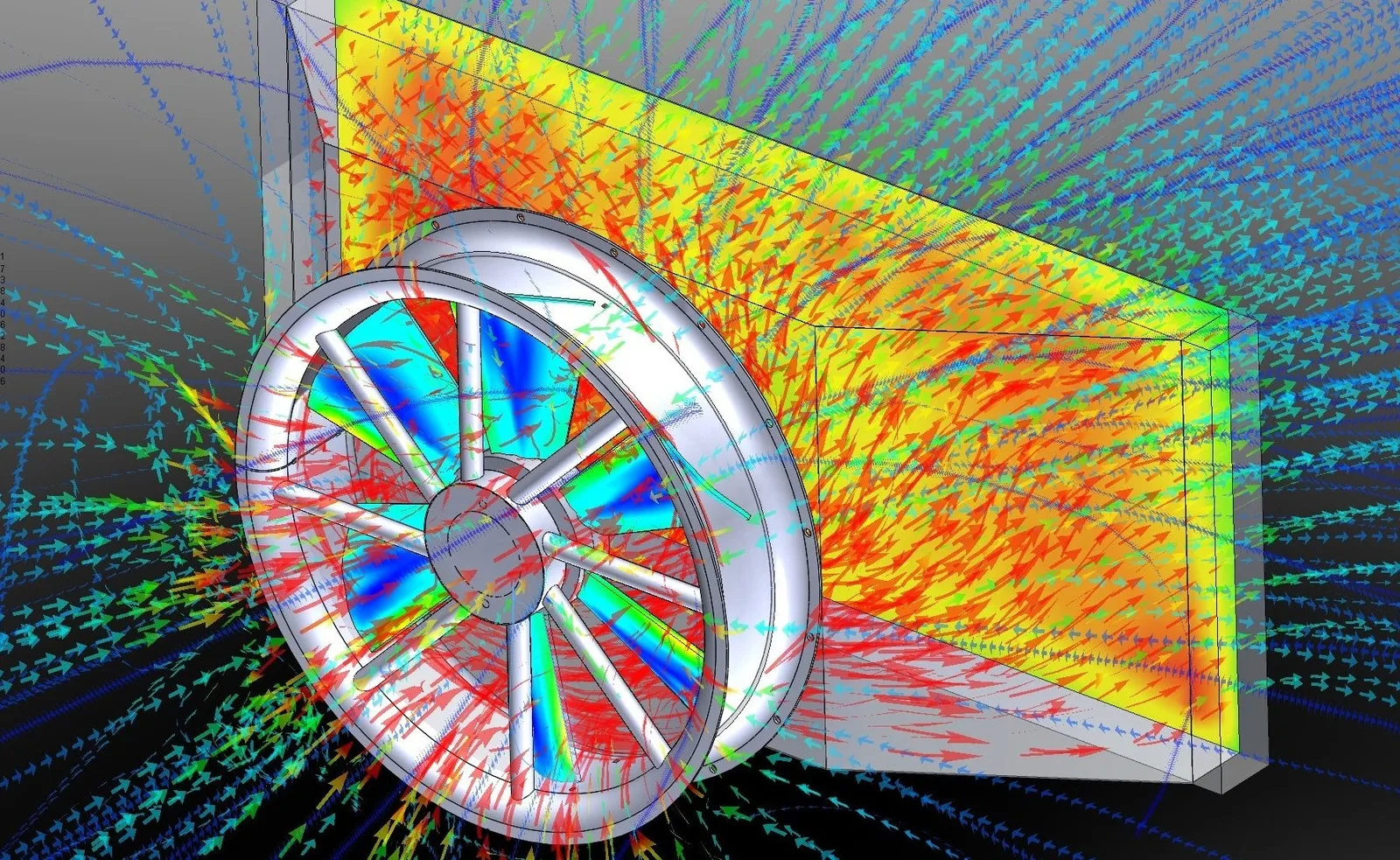
The geometry is prepared and meshed. Near-wall resolution, local refinement and cell quality are matched to the flow regime and target quantities.
Turbulence, heat transfer, material properties, sources, inlets, outlets and steady or transient solution choices are documented.
3. Checks and evaluation
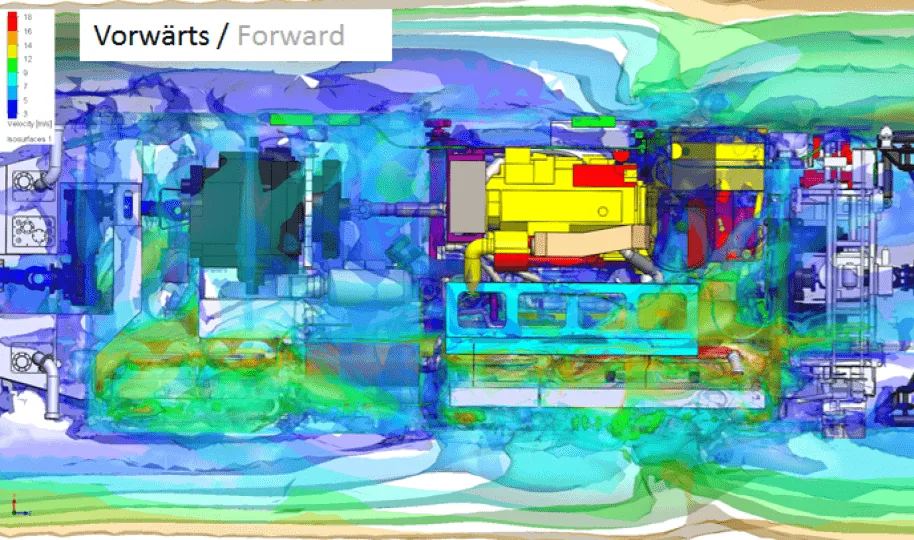
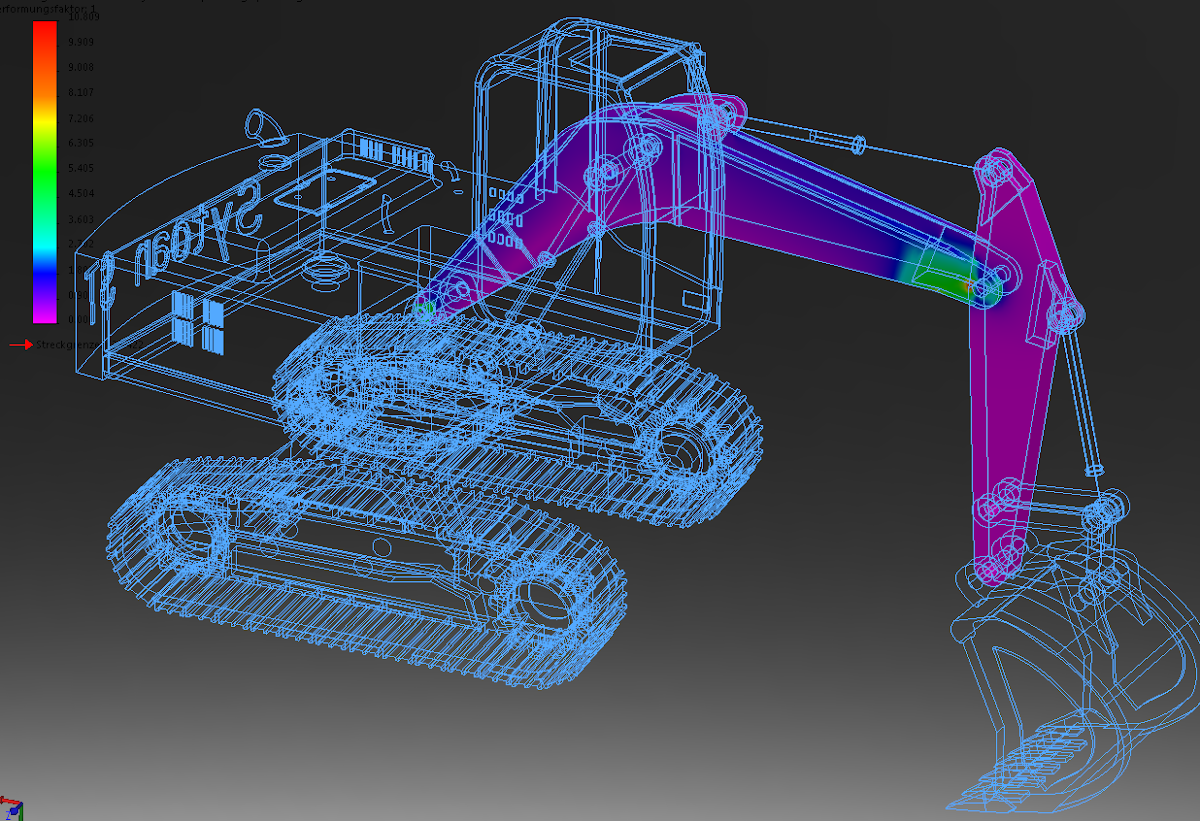
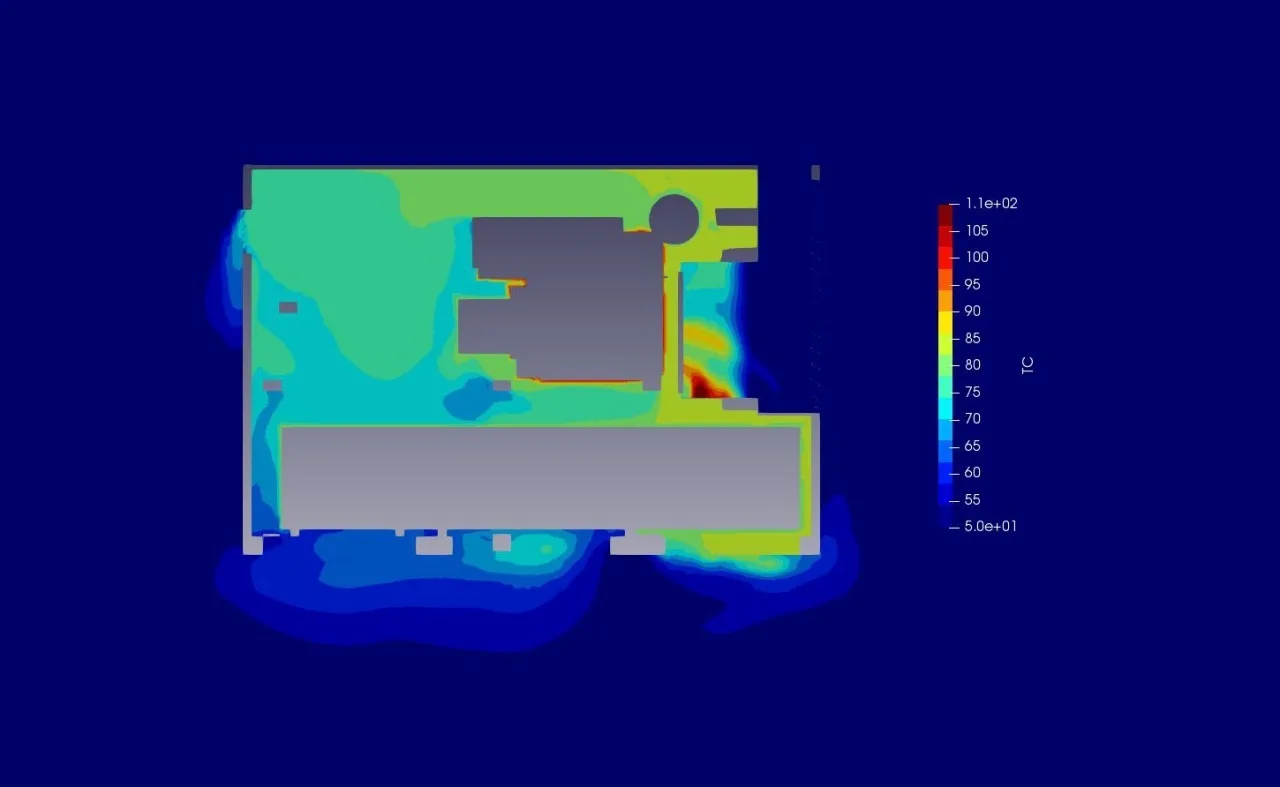
Convergence, mass and energy balance, and relevant sensitivities are checked. Fields and quantities are then converted into variant comparisons and concrete design actions.