Model & approach
- Simulate representative tube-and-fin regions in detail
- Derive a direction- and operating-dependent surrogate for the complete plant model

Project study
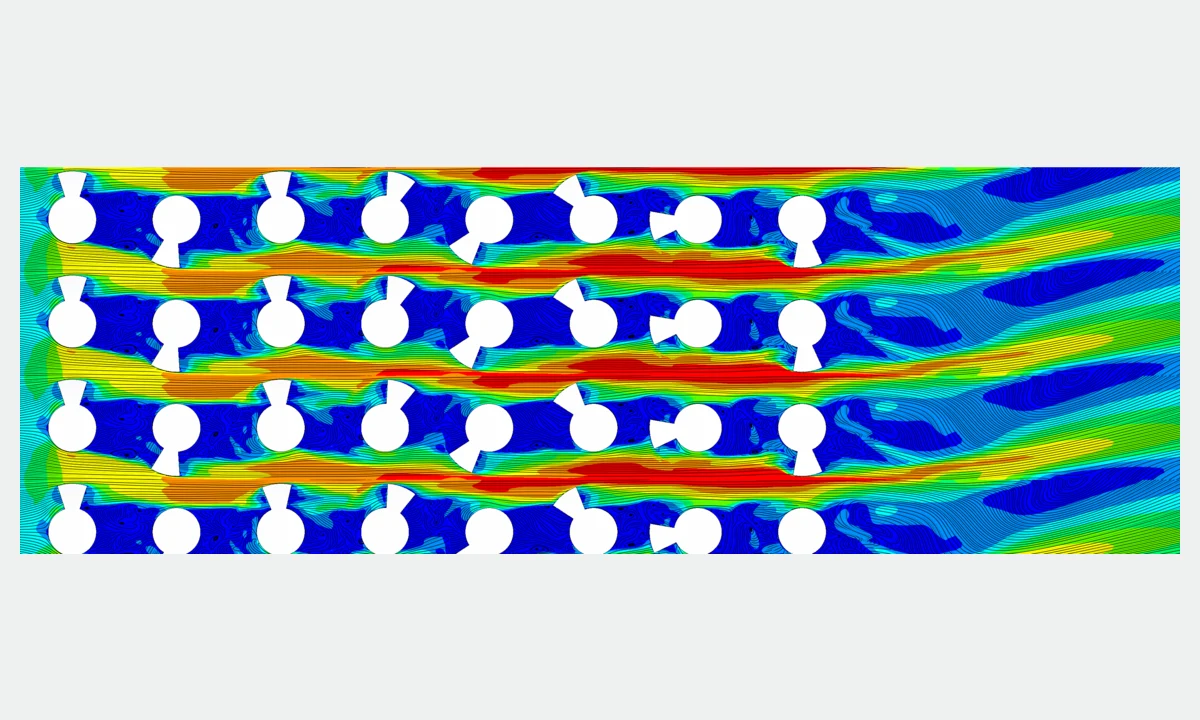
A reduced-order CFD approach translated the complex tube-and-fin structure of an industrial heat exchanger into a defensible resistance model for the plant-level network.
Engineering question
Model & approach
Boundary conditions
Results of the assessment
Engineering consequence
 Process & plant engineering
CFD simulation
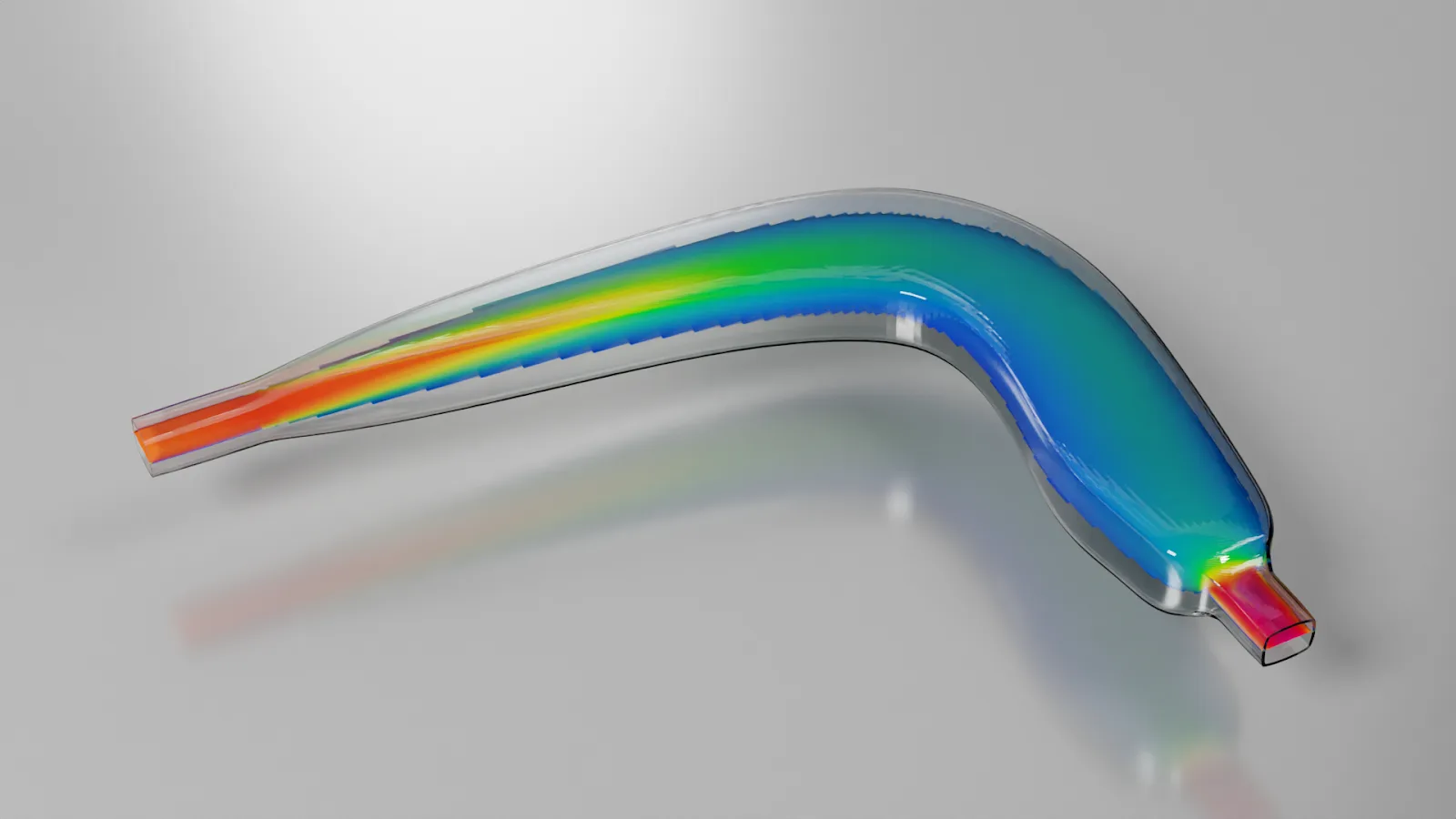
CFD and adjoint optimization were used to develop a compact flow turn within defined packaging constraints.
View project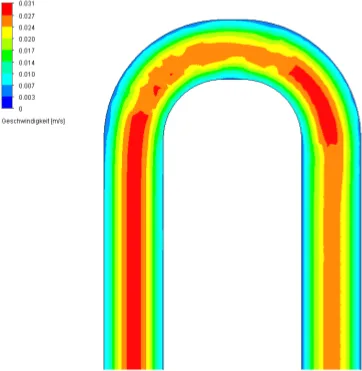 Process & plant engineering
CFD simulation
CFD assessed the form and orientation of separator baffles whose movement through pipe bends could impair stable operation.
View project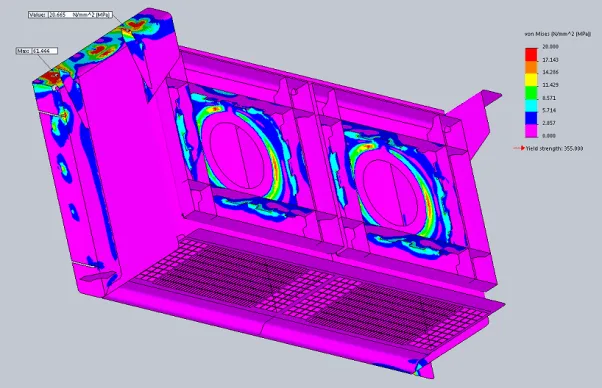 Process & plant engineering
FEA structural analysis
A finite-element model assessed the assembly, welded joints and support reactions across operating, exceptional and vibration load families.
View projectA similar question?