Model & approach
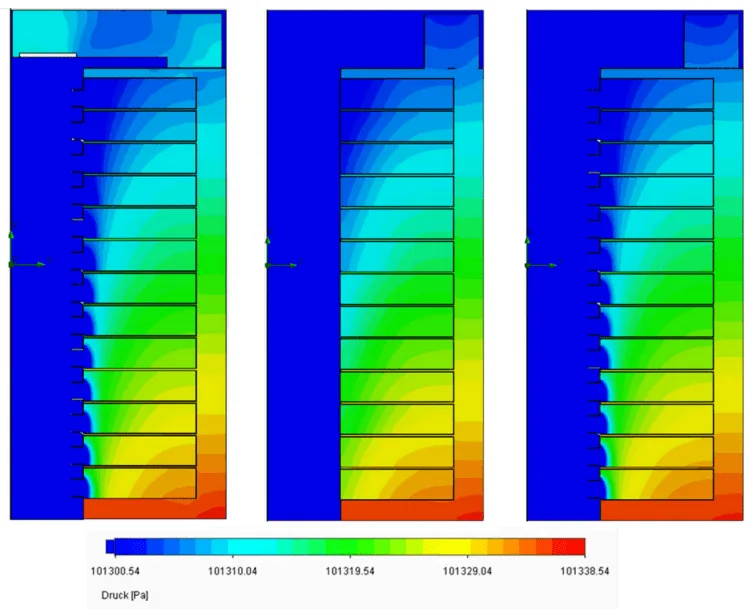
- Vary the gap between the module rear face and container wall
- Evaluate pressure loss, airflow distribution and temperature fields under comparable loads
- Include flow margin and construction tolerances in the recommendation

Project / Energy & storage
A supplementary CFD study compared the gap behind the modules at the container wall to balance usable space against pressure loss and cooling margin.
Engineering question
Model & approach
Boundary conditions
Results of the assessment
Engineering consequence
 Energy & storage
CFD simulation
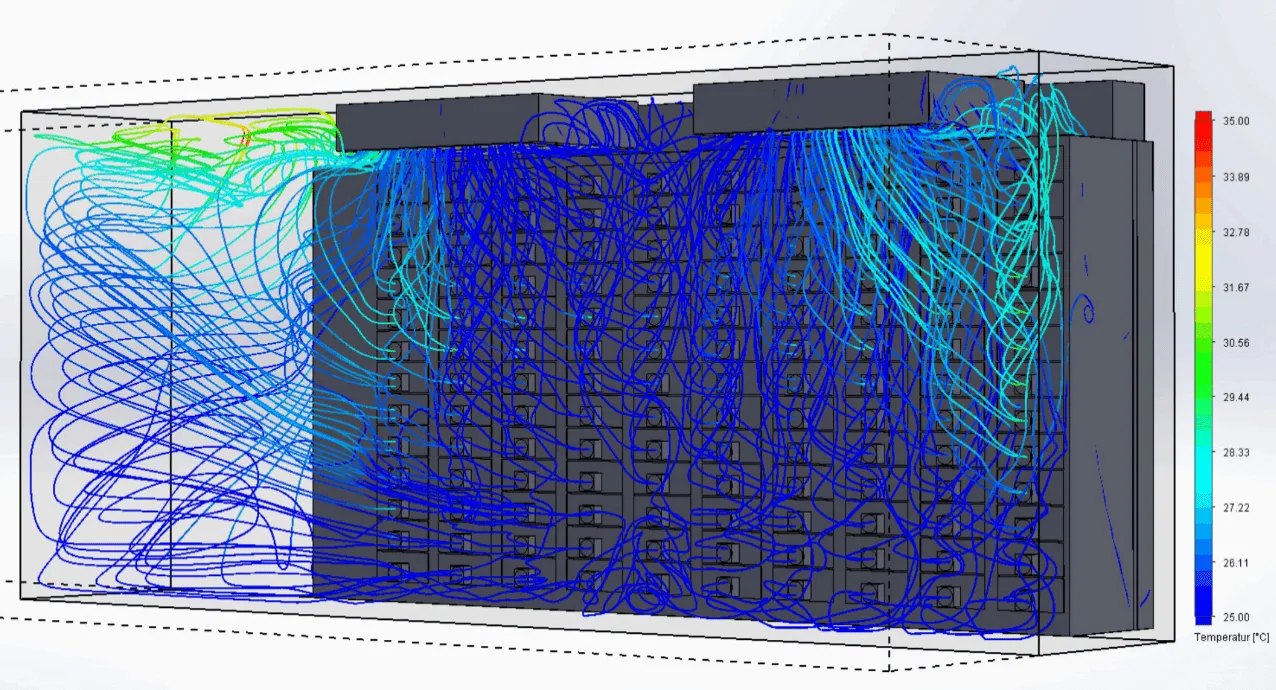
A detailed module model was connected to airflow and the heat balance of the complete container, bringing cooling demand, bypass and component position into one assessment.
View projectCFD simulation
The study scope covers passive heat rejection and forced-air cooling of a battery module under transient operating profiles and alternative inlet and outlet arrangements.
View projectThermal analysis
A transient coupled analysis connected cells, current-carrying interconnects and integrated cooling channels to examine temperature development under an electrical load profile.
View projectA similar question?